

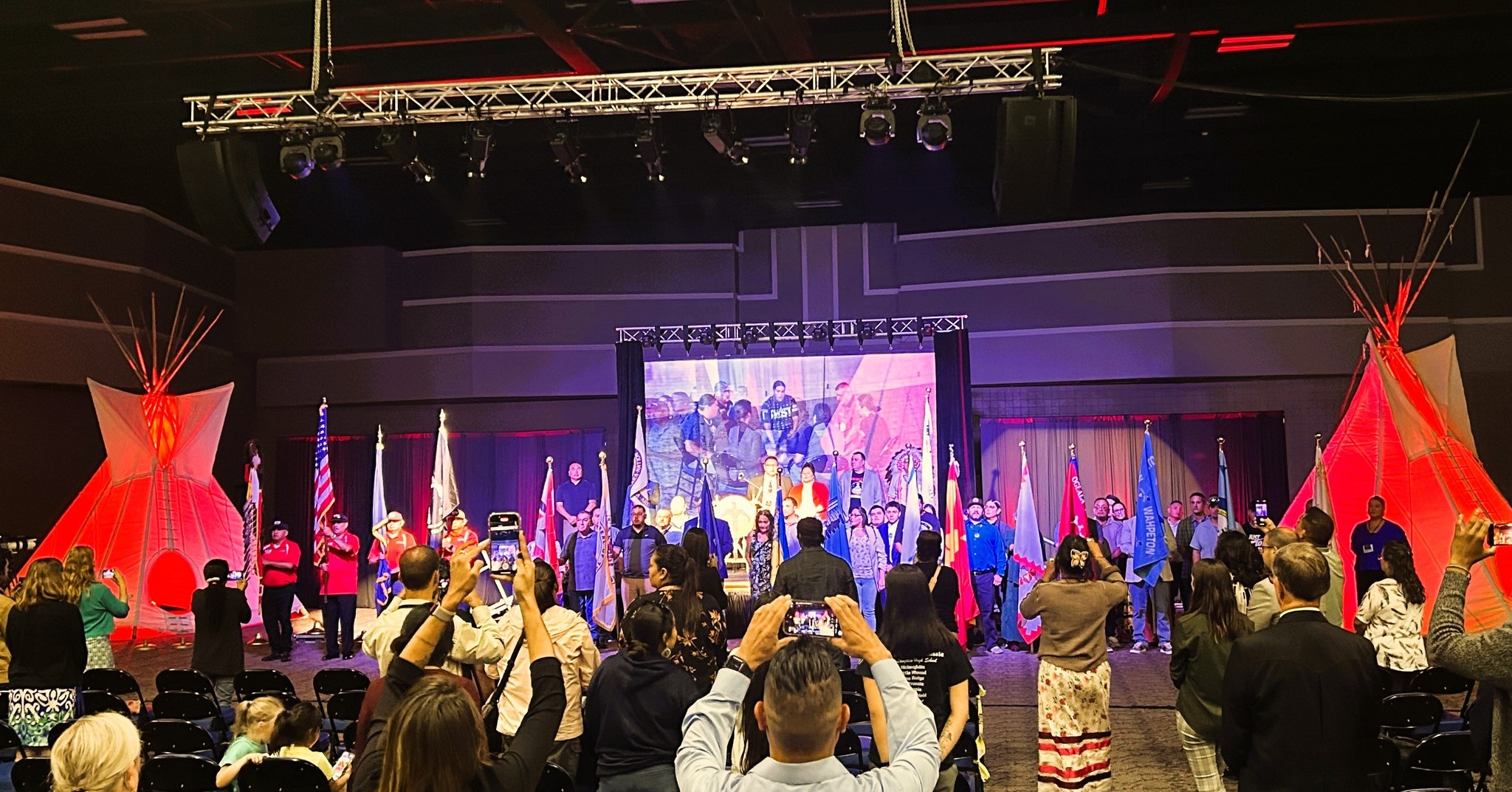
In 2025, something unprecedented took shape across the Midwest.
What began as a federal investment through the Solar for All program quickly became something much larger: a Tribal-led, values-driven coalition committed to long-term energy sovereignty. The Tribal Renewable Energy Coalition (TREC), was formed after being awarded $135 million through Solar for All, one of the largest clean energy investments ever directed toward Tribal communities.
TREC was never intended to be just a funding mechanism. From the start, it was designed to be a shared table, a space where Tribal Nations could plan, learn, and build together, on their own terms.
Building the Coalition
Throughout 2025, Indigenized Energy focused on relationship-first coalition building. This meant hundreds of one-on-one conversations, technical assistance sessions, and planning meetings with participating Tribes. Over the course of the year, more than 50 Tribal departments were engaged across housing, utilities, energy, administration, and leadership teams, grounding every step in Tribal governance and decision-making.
The coalition grew into a living network of 14 Tribal partners, each identifying designated points of contact and actively participating in 34 coalition-wide meetings. These weren’t symbolic check-ins, they were working sessions focused on readiness, infrastructure gaps, staffing needs, and community priorities.
Turning Planning Into Action
Between January and August 2025, TREC moved from vision into implementation.
Sub-agreements were issued to nearly every participating Tribe, with the majority fully executed, laying the administrative foundation needed for long-term clean energy programming. Fidelity bonds were secured or underway across Tribes, and Solar Program Managers were hired or in progress in most communities, creating real, on-the-ground capacity where it had not existed before.
Tribes advanced participant selection, department alignment, and internal coordination, ensuring that energy planning did not live in silos. Residential solar emerged as a priority project type across the coalition, and kickoff or scoping meetings were completed with multiple Tribes, leading to two successful early solar builds through TREC partnerships.
When Solar for All Was Canceled
In late summer, Solar for All was canceled.
For many programs, that moment marked an ending. For TREC, it became a turning point.
Rather than allowing the coalition to dissolve with the loss of federal funding, Indigenized Energy called on Tribal partners to stay, reflect, and reimagine what the coalition could become. The question shifted from “What did we lose?” to “What have we already built together, and what do we protect moving forward?”
The answer was clear: relationships, trust, shared knowledge, and momentum.
From August through December 2025, TREC entered a new phase.The coalition continued to operate as a space for capacity-building and peer learning, with Tribes participating in cross-Tribal exchanges and knowledge sharing. More than 50 Tribal resources were created, including templates, toolkits, and checklists designed to support future clean energy development regardless of funding source
In-person visits continued across multiple reservations, and Tribal leaders and staff remained visible nationally, participating in panels, conferences, steering committees, and convenings. Work continued to help guide the coalition through this transition period, reinforcing that TREC is led by Tribal priorities, not programs.
Most importantly, Tribal partners were asked to recommit, not to a grant, but to Indigenized Energy and to one another.
TREC is one of the first coalitions of its kind in the Midwest, not because of its funding size, but because of its foundation. It centers Tribal sovereignty, builds internal capacity, and creates shared infrastructure that can adapt as funding landscapes change.
In its first year alone, TREC demonstrated what is possible when Tribes are resourced, respected, and connected. Even in the face of uncertainty, the coalition held.
As Indigenized Energy looks ahead, TREC remains a cornerstone of its work, a reminder that true energy transformation is not built overnight, and not built alone. It is built through relationships that endure, even when circumstances change.
The future of Tribal renewable energy is still being written. TREC is proof that the authors are the Tribal Nations themselves.