

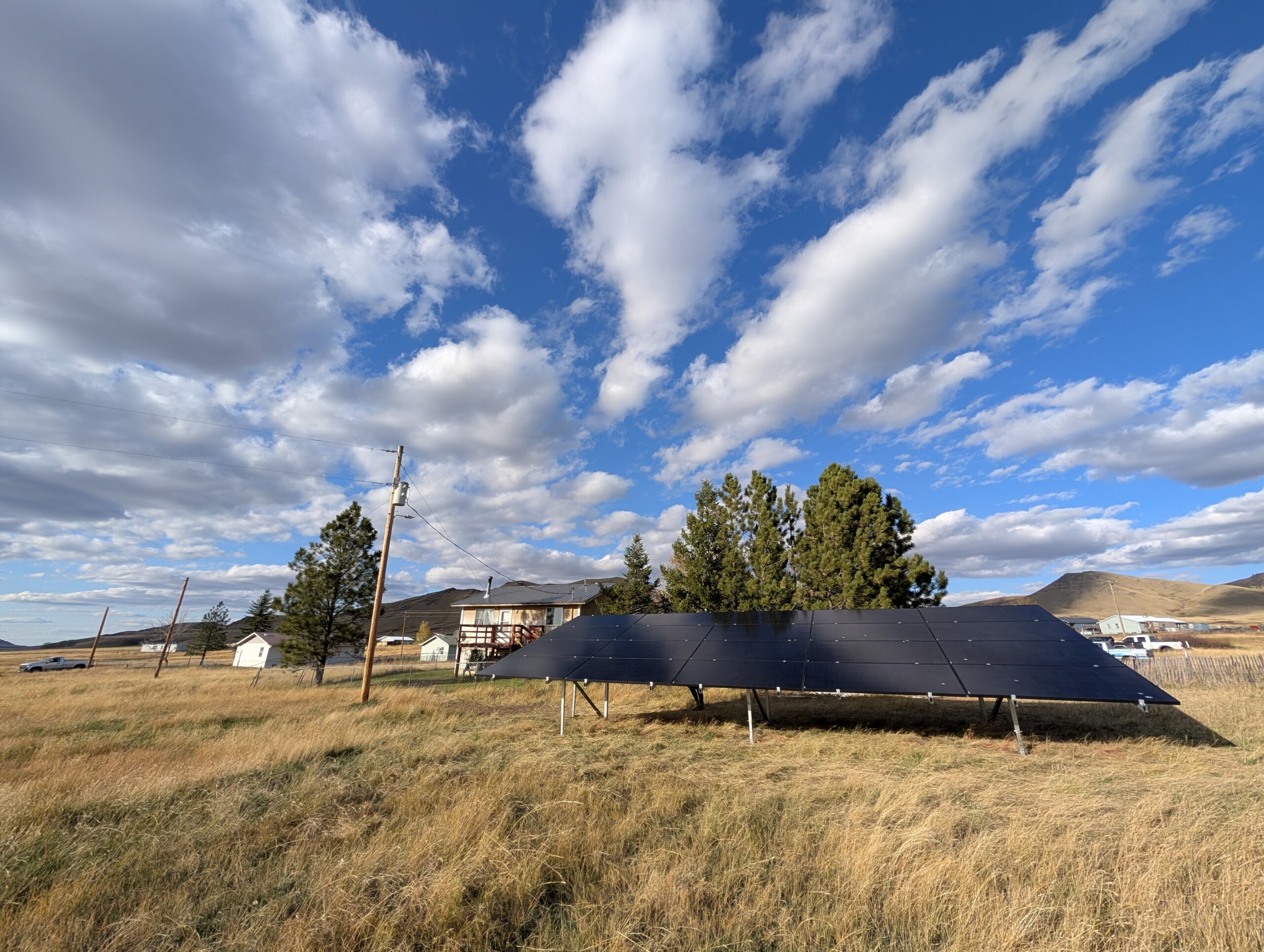
Just weeks after one of the nation’s earliest Solar for All projects was completed on the Oglala Sioux Reservation, a second historic build took shape in northern Montana. In mid-October 2024, Indigenized Energy and partners completed a Solar for All installation with the Chippewa Cree Nation at Rocky Boy, making it one of the first Solar for All projects built anywhere in the country.
The Chippewa Cree project was part of the very first wave of Solar for All implementation, demonstrating how quickly Tribal communities moved from planning to action. Coming just weeks after the Oglala Sioux build, the project showed that Tribal-led solar work was not only possible under Solar for All, but ready to lead from the start.
The project delivered residential-scale solar and battery storage designed to reduce household energy costs while increasing reliability and resilience.
The installation included:
- A ground-mounted solar system averaging 7.6–7.7 kW
- Approximately 20 solar panels per installation
- 19.2 kWh of battery storage for backup power
- Donated solar panels, inverters, optimizers, and battery equipment
- A durable ground-mounted racking system built for long-term performance
Across the Chippewa Cree and Oglala Sioux projects combined, the total installed capacity reached approximately 15 kW, producing an estimated 10,200 kWh per household annually and reducing electric costs by an estimated $1,200 per year per home .
Like the Oglala Sioux project before it, the Chippewa Cree build was the result of a joint effort. Indigenized Energy worked in close partnership with the Chippewa Cree Nation, Freedom Forever as the installation contractor, and clean energy manufacturers, Jinko Solar, who donated key equipment. Together, these partners helped ensure the project could move forward quickly and successfully during the earliest days of Solar for All .
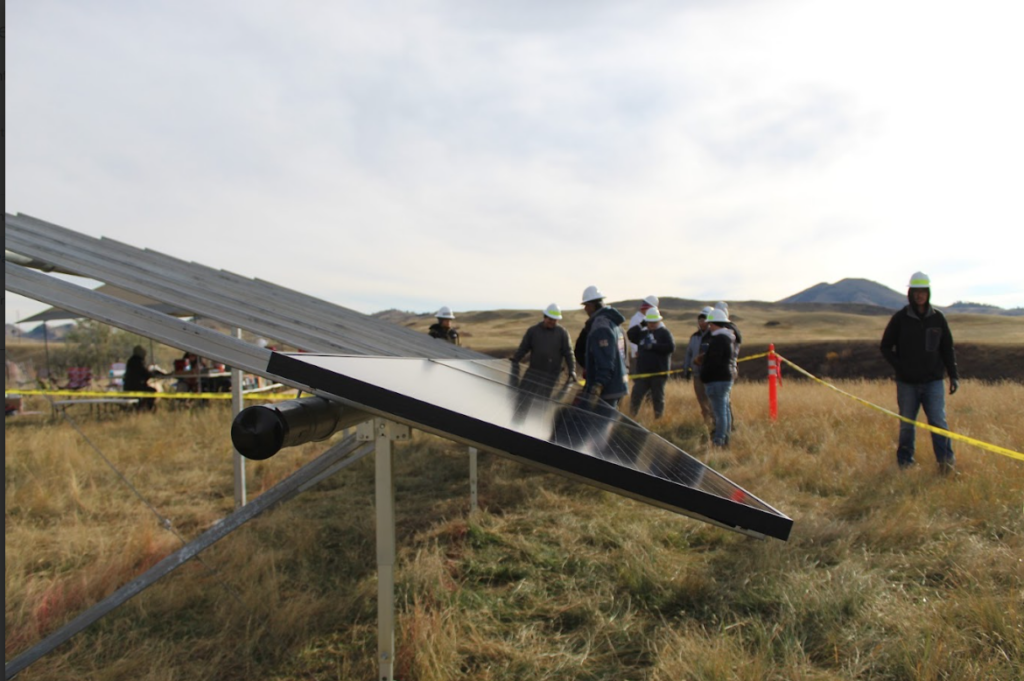
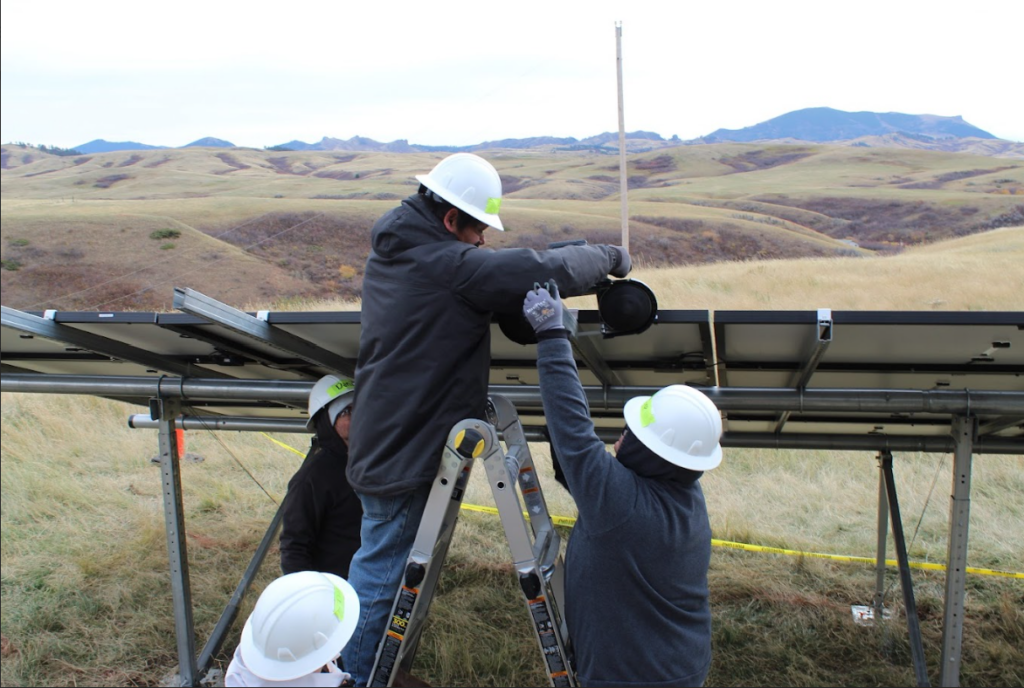
Workforce training was a central part of the Chippewa Cree project. Local Tribal members participated in hands-on solar installation training, gaining practical experience in the field. In addition, a local Chippewa Cree solar contractor received training on the installed equipment, helping build longer-term capacity within the community.
Across the early Solar for All builds, dozens of Tribal members were trained, with some going on to secure employment in the solar industry beyond their home communities .
As one of the first Solar for All projects completed in the nation, the Chippewa Cree build represents more than a single installation. It reflects the readiness of Tribal Nations to lead clean energy work when given access to resources, trust, and partnership.
Built just weeks after the Oglala Sioux project, this installation helped establish early momentum for Solar for All and reinforced a core truth of Indigenized Energy’s mission: when Tribes lead, clean energy moves faster, deeper, and with lasting impact.